

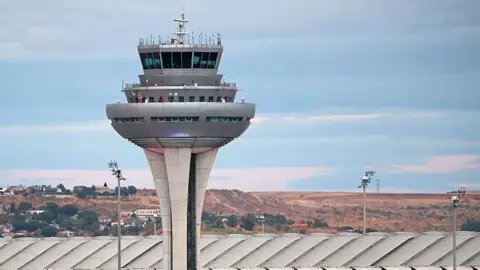
Spain has restricted its skies to US planes taking part in strikes on Iran, as confirmed by Madrid's defence minister Margarita Robles.
Government Position
"We are denying the use of our military bases for any operations connected to the war in Iran," she said, noting that Spain had "communicated this position to the US administration from the beginning."
The top diplomat José Manuel Albares explained the goal of the decision was to "not do anything that could prompt an intensification in this conflict."
International Tensions
The US has not yet responded, but President Trump has earlier warned to impose a full trade embargo on Spain over its resistance to the Iran war.
Firm Position
Since the start of the conflict in the end of February, the Spanish Prime Minister Pedro Sánchez has been a leading critic of the US and Israeli attacks, labeling them "dangerous" and "unlawful."
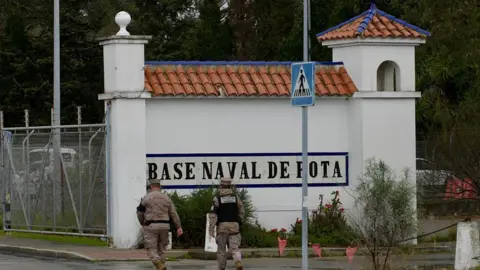
Earlier in March, Sánchez said Spain had refused the US use of the two shared military bases at Rota and Morón, located in Andalusia.
"Ours is an independent state that has no desire to participate in unlawful conflicts," he said.
He also announced that "every request that concerned missions related to the campaign in Iran were denied - without exception, including those of refuelling aircraft."
Flight Paths
Certain American aircraft involved in missions in Iran are operating from the RAF Fairford base in the UK, following a British decision to a appeal from the US.
Planes taking off from there will be forced to bypass a large portion of the region - either by routing across the Atlantic Ocean or over France.
It has been reported that aircraft would be permitted to enter Spain's skies or touch down at the bases solely during an urgent situation.
Broader Context
In a national broadcast, the Spanish prime minister discussed wars in Ukraine and Gaza and said the Spanish government's stance could be described as "no to war."
Subsequently, the Iranian embassy in Spain noted Tehran would be open to requests from Madrid about shipping through the critical waterway because Spain was "adherent to global norms."
Market Effects
Nearly one-fifth of the world's oil supply usually transits through the strategic strait between Iran and the tip of the Arabian peninsula.
Recently, the danger of attacks by Iranian drones, missiles has kept it effectively closed, causing crude costs to soar.


